Tuesday, February 9, 2021

#52 Ancestors 2021, Week 1, Beginnings: My Royal Lineage


As a child, long before I had any formal notion of genealogy, I was fascinated by a large chart that hung in the stairwell of Grandmother Summers' house.  It was decorated with colorful shields across the top and showed a long hand-written list of our family's descent from famous kings including Alfred the Great and Charlemagne, ending with a tiny list of my grandparents' children. I don't know what happened to the original after my grandmother's death, but at some point, someone made copies of the chart, shrunken in size and in black and white, and I do have a copy of that.  So, I've decided to explore some of those royal connections.

I'm not sure who did this work originally.  My best guess is that the author was my grandmother's cousin, Eleanor Brooke Perrie.  Cousin Eleanor, as she was known in the family, was very into family history, especially if it connected to royalty.  This chart seems like something she would have done. So, I'm not vouching for the accuracy of the lineage, just enjoying the interesting possibilities.


Edward I
The main lineage on this chart begins with Edward I of England (1239-1307), who, according to Cousin Eleanor, would have been my too-many-greats-to-count grandfather.  He was the son of Henry III and Eleanor of Provence and named because of his father's devotion to Edward the Confessor. He was also called Edward Longshanks because of his unusual height and "the Hammer of the Scots"  because of his fierce wars against his neighbor to the north. Edward has a mixed record as king.  He is credited with establishing Parliament as a permanent institution and reforming much of English law.  On the other hand, he is criticized for his cruel treatment of the Welsh and Scots and for expelling Jews from the kingdom in 1290.  He was said to be feared and respected rather than loved by his people. 

In 1254, 15-year-old Edward made a political marriage with 13-year-old Eleanor of Castile. They had at least 14 children before Eleanor's death in 1290.  For purposes of this lineage, however, the important one is the 8th and youngest daughter, Elizabeth of Rhuddlan (1282-1316).  

Humphrey

Elizabeth's first marriage to John of Holland lasted only a year or so and was childless.  My family is apparently descended from her second marriage to Humphrey de Bohun, the 4th Earl of Hereford (1276-1322), whom Elizabeth married in 1302. Under his father-in-law, Humphrey took part in several campaigns against the Scots.  Humphrey was apparently well-educated, a book collector and a scholar and he saw to it that all his children, including his daughters, received an education in the classics.  

Even though he was the brother-in-law of King Edward II, Humphrey, like the other barons, was insistent that the king keep to the provisions of the Magna Carta and when Edward II began to exert what they considered excessive power, the barons revolted.  Humphrey died in one battle of rebellion in Yorkshire in 1322.

Isabella, the She-Wolf


Humphrey and Elizabeth had at least ten children, including twins Edward and William.  William de Bohun (1312-1360), became the first Earl of Northampton in 1337. King Edward II, who would have been William's uncle, was overthrown in 1326 by the machinations of his Queen, Isabella (also known as the She-Wolf of France) and her lover, Roger Mortimer, an English baron. Mortimer himself was overthrown a few years later by Edward III with help from his cousin William de Bohun.  (Isn't family history exciting? Never know which relative will want to assassinate you, especially if you happen to be king.) William's assistance earned him the Earldom and he became a lifelong friend and confidante of Edward III. In addition to his skill as a warrior, William was a renowned diplomat who negotiated several treaties with France and was appointed Admiral of the Northern Seas in 1352. 

William de Bohun, Earl of Northampton, married Elizabeth de Badlesmere and had a daughter with her, Elizabeth de Bohun (1350-1385), from whom my family line continues. 

She married Richard Fitzalan (1346-1397), the 4th Earl of Arundel. At the coronation of Richard II, Richard Fitzalan carried the crown. But Fitzalan had a kind of on-again, off-again relationship with Richard II.  In 1387, the Earl was one of the leaders of a rebellion against Richard and Richard never really forgave him for that. In 1397, the king had Richard Fitzalan arrested and imprisoned for his opposition.  He was beheaded later that year. 

Arundel (in red) and Mowbray (white collar) meet with Richard II

Richard Fitzalan  and Elizabeth de Bohun had seven children, including Elizabeth Fitzalan (1366-1425), who married five times.  My family appears to descend from her second marriage to Thomas Mowbray (1366-1399), the first Duke of Norfolk. He was also caught up in the nobility's power struggle with Richard II and died in exile in Venice of the plague. He had also managed to quarrel with Henry of Bolingbroke (later Henry IV) which resulted in the loss of his title of Duke of Norfolk, although the family did retain his other titles.  

Mowbray Arms
As an aside, Mowbray's quarrel with Henry Bolingbroke and his subsequent banishment appear in the first act of Shakespeare's Richard II.  Thomas Mowbray prophetically replies to King Richard's : Lions make leopards tame." [reference to their respective coats of arms] with the retort, "yea, but not to change his spots." Mowbray's death in exile is announced later in the play by the Bishop of Carlisle.  

Thomas Mowbray and Elizabeth Fitzalan had two sons and three daughters, including Margaret Mowbray (1391-1459), from whom my family descends. Margaret married Robert Howard (1398-1436), about whom I know very little.  However, they were the parents of John Howard (1425-1485) in whom my family line continues. You may remember above that Thomas Mowbray lost the title of Duke of Norfolk.  His grandson, John Howard, was given the title again after he supported Richard III's usurpation of his brother Edward's throne (and also managed the disappearance of the Princes in the Tower. You remember that story!) 

The title of Duke of Norfolk is a big deal, considered the premier dukedom in the kingdom and also includes the title of Earl of Arundel.  The seat of the dukedom is at Arundel Castle in West Sussex. Since John Howard's accession in 1483, the title has stayed in the Howard family. 


Arundel Castle (2017)

John Howard was a staunch adherent of the House of York during the War of the Roses and was knighted by King Edward IV in 1461 and became part of the royal household as the King's carver.  By 1468, he had advanced to Treasurer of the Royal Household. In 1483, John Howard carried the royal banner at the funeral of Edward IV.  As mentioned above, Howard supported Richard III's ascension to power and was rewarded with the powerful dukedom.  He carried the crown at Richard III's coronation. He died with his friend and patron, Richard III, at the Battle of Bosworth in 1485. 

About 1442, John married Catherine Moleyn and had two sons and four daughters with her.  His eldest and only surviving son, Thomas Howard, (1443-1524) is the ancestor of my family.  

Thomas, the second Duke of Norfolk and also the Earl of Surrey, was also the grandfather of both Ann Boleyn and Catherine Howard, the second and fifth wives respectively of Henry VIII.  He served four Kings: Edward IV, Richard III, Henry VII, and Henry VIII. 

And that is about all the royal intrigue I can handle for today, so I will leave Thomas's career as courtier, diplomat and soldier as well as the rest of the line for another entry.  

Isn't it fun to connect yourself to all that far away history?  To Be Continued. 


Sunday, December 13, 2020

#52 Ancestors 2020 Week 39 Should Be a Movie: Anos Walker and Frankie Peters, Romeo and Juliet in the Wilds of Virginia

 Charles Walker was born about 1745 and lived in Orange County VA.  He was a member of the crew that helped George Washington survey his property on the far side of the Alleghany mountains before the American Revolution.  His surveying compass is still passed down in his family.  

After the war, Charles, like many former soldiers, looked to migrate westward beyond the mountains.  In 1782, Charles and his wife Margaret Peters along with Margaret's brothers John and Christian Peters, left the Valley of Virginia and traveled west eventually settling in the Shenandoah Valley on the east side of the New River near the present-day town of Narrows in Giles County VA.  John Peters settled a short distance up the river. 

 As the map shows, they were right on the border of VA and present-day West Virginia.


On that trek across the mountains was baby Chrispi Anos Walker, the son of Charles and Margaret Walker and the 4X-great grandfather of my sons.  He was born in Rockingham County VA 14 March 1782.  He was known in the family as Anos. Like many other young people at the time, Anos was illiterate, but was determined to improve this deficiency by getting an education.  Eventually he became very good with figures, was an able speaker and loved to debate. 

Now Anos was engaged to marry his cousin, Frances Jane (Frankie) Peters, the youngest child of his uncle John Peters, mentioned above.  However, Frankie's parents were vehemently opposed to the marriage, in part because of the close kinship, and kept her under watch.  Anos was forbidden to come to their  home.

Frankie, however, was determined to escape the watchful eye of her family and slip away undetected. Anos managed to get a message to her informing her of a certain time when he would be at his parents' house with a marriage license and a preacher.  

Just after daybreak on the morning of April 11, 1810, 16-year-old Frankie slipped away from her home and started running toward the Walker home. 


Her absence was soon observed, however, and two of her brothers (She had five older brothers.) started chasing her.  She had a lead though and arrived breathless at the Walker home.  She rushed through the doorway shouting "Now or Never!!"

Her sudden arrival at that early hour took Anos by surprise, but hearing the urgency in Frankie's voice, he sprang out of bed, roused the preacher and was married forthwith in his nightshirt. The two brothers arrived too late to prevent the marriage and eventually the family was reconciled to the newlyweds. 

Chrispianos Walker served in the War of 1812, volunteering into the 4th Regiment of the Virginia Militia at Giles County Courthouse.  He served as the Orderly Sergeant of his company. 

Anos and Frankie later moved to Mercer County and raised a family of eleven children. Anos was a very competent surveyor and served as a justice of the peace for Mercer County. In 1837, he was appointed a commissioner to survey a site for the new county courthouse.  

By 1852, Anos and Frankie were living at Devil's Fork in the newly formed Wyoming County. Anos Walker died in 1876.  After her husband's death, Frankie went to live with her daughter Valerie and  died at her daughter's home at the age of 90 in 1884. 


Monday, November 30, 2020

#52 Ancestors 2020 Week 49 Oops: Matthew Scrivener, my almost relation

When the time came to name my sons, I looked for family names and settled on Matthew for one son because the name showed up in both sides of the family, Matthew Agee, the first Agee in the new world  and Matthew Scrivener,  the earliest Scrivener in the new world. It seemed a propitious name. Unfortunately, I didn't do quite enough research all those years ago, and while my son is definitely a descendant of Matthieu Agee,  I've never been able to prove a relationship to  Matthew Scrivener. Nevertheless, since my son is named after him, I feel a certain fondness for Matthew. 

 Matthew Scrivener was born about 1580 in Ipswich, England during the reign of Elizabeth I. He was baptized in May 1580 at St. Nicholas Parish in Ipswich.  He was the son of barrister Ralph Scrivener, who had grown wealthy in the wool trade, and his wife, Mary Dowsing Smith. Ipswich was the hometown of Cardinal Thomas Wolsey, counsellor of Henry VIII.  The Cardinal had a keen interest in education and built 12 schools, including one in Ipswich, which Matthew may have attended. 

Matthew inherited property from his father's will in 1607, along with his brother John and sisters Elizabeth and Marie, but since he was the younger son, he may have decided to try and improve his fortune in the new world. 

Matthew Scrivener was among the first settlers in Jamestown VA, arriving in January 1608 aboard the John & Francis, commanded by Captain Christopher Newport.  

The ship brought badly needed supplies to the settlement that was struggling with one of the coldest winters of the century. However, the supplies didn't really help the colony since they were mostly destroyed by a fire only a few days after Newport's arrival. 

 Listed as "Matthew Scrivener, gentleman" in early Virginia records, he was a friend and supporter of Captain John Smith. He served as the first secretary of the colony and briefly as the Governor of the colony. 

Unfortunately, the talented young Matthew drowned in January 1609 at the age of 28 while attempting to cross to nearby Hog Island in a storm. Eight other colonists were drowned in the accident including several members of the Governing Council. 

 So, Matthew died with no children and therefore we cannot be his direct descendants. 

However, he did have a brother John Scrivener, who purchased Sibton Abbey in Suffolk, and built an estate nearby where Scriveners still live, in Suffolk that is, not the Abbey, which is now a ruin.

I haven't entirely given up hope of finding a relationship to these Scriveners. Scrivener isn't a very common name, after all, and I would love to discover that the John Scrivener who ended up in Maryland in the early 1700's was a nephew or cousin of Matthew who followed him across the Atlantic.  But for now, Matthew Scrivener remains a lost connection.

Saturday, October 31, 2020

#52 Ancestors 2020 Week 38 On the Map: Great Uncle Arthur and Halley's (AKA Storer's) Comet

If you know anything at all about astronomy, you've probably heard of Halley's Comet, that great fireball which periodically soars across our skies.  I bet you didn't know that before it was called Halley's Comet, it was called Storer's Comet, in honor of my great-uncle (10X) Arthur Storer, America's first astronomer, or at least the first named astronomer.  

Arthur was born in Leicestershire, England, about 1645, the youngest child of Edward Storer and Katherine Babbington. Arthur's father died in 1644, shortly before Arthur's birth, and his mother, with four young children, married again to William Clarke, an apothecary in Grantham, Lincolnshire. 

Isaac Newton
Growing up in Lincolnshire, Arthur became friends with Isaac Newton, a few years his senior, who boarded with the Clarkes while both he and Arthur  attended the King's School in Grantham. (Newton reportedly developed a crush on Arthur's sister Katherine, although they did not marry.)  It was during this time that Newton developed his interest in science and began his experimentations.  It is alleged that Arthur had a role in spurring Newton to excel.  Apparently the two boys got into a fight over their respective academic talents and Arthur bested Newton, thus inspiring him to work harder to beat out his rival. Newton became the top-ranked student at the school, but remained lifelong friends with Arthur, mentioning him several times in his journals. 

While Newton went on to Trinity College, Cambridge, there is no evidence that Arthur attended Cambridge, but he certainly kept up his interest in science.

In 1672, Arthur's step-sister Anne (my 9X-great grandmother) emigrated to Calvert County Maryland with her husband James Truman and three daughters: Martha, Anne, and Mary.  Arthur went to Maryland with the Truman's and was a witness to James Truman's will in July of 1672.  Truman died shortly thereafter, and Anne married for the second time to Robert Skinner.  


Arthur kept detailed notes of his scientific observations, and often wrote to his friend Isaac Newton back in England to share his work.  In 1680 and again on August 14, 1682, he described the appearance of comets in the sky over the Patuxent River, the later comet being what is now called Halley's Comet.  His notes say that the comet stayed visible until September 18, 1682.  His notes include this poetic description:  “It was a very great amazement …to see a long bright stream in form like a sword streaming from the horizon about 30 degrees in altitude…so nearly after sunset.” Storer's observations were considered to be the most accurate of his contemporaries, with the exception of the Royal Observatory in Greenwich, and the comet was thereafter referred to as Storer's Comet.

So, how did it become Halley's Comet?

At the time of Storer's observations, comets were considered singular phenomena, that is, they appeared once and then vanished off into the ether. The appearance of a comet was often regarded as an omen linked to everything from the death of kings to natural disasters. But it was regarded as a temporary phenomenon, flashing through space and then disappearing. Now, however, scientists believe that this particular comet has been around for thousands of years and is probably the comet referenced by Greek astronomers in 466 BC and by Chinese, Babylonian and Roman astronomers in later centuries. [See History.com for more examples.] 

It was Edmond Halley who postulated (using Newton's gravitational theory) that this was actually the

Edmond Halley

same comet periodically revisiting Earth's atmosphere.  In 1705, Halley predicted that the comet observed by Storer in 1682 and by others earlier would reappear in 1758 and approximately every 76 years after that. 

Halley was eventually proved correct, although he did not live to see the proof.  He died in 1742, but the comet appeared in the sky on Christmas night 1758, right on schedule.  Its appearance was hailed as a triumph of scientific reasoning and Newtonian physics:

“By its appearance at this time, the truth of the Newtonian Theory of the Solar System is demonstrated to the conviction of the whole world, and the credit of the astronomers is fully established and raised far above all the wit and sneers of ignorant men,” the British publication the Gentleman’s Magazine wrote. [History.com ]

Shortly thereafter, the French astronomer Nicolas-Louis Lacaille named the comet in Halley's honor. 

OK.  Halley probably deserves the honor, but really, if Arthur hadn't beat up Isaac Newton back in Grantham,  Newton might never have been motivated to excel, and might never have developed his gravitational theory, and Halley might not have been able to theorize a recurring comet.  So I still think Uncle Arthur deserves some credit.


Arthur Storer died in Calvert County MD late in 1686 leaving a will with bequests to his mother, his sisters Katherine and Anne and brother Edward.  


Arthur is memorialized in Calvert County with the Storer Planetarium at Calvert High School, located on the property where Storer's sister Ann Truman Skinner lived and where he is probably buried. 


Sunday, October 25, 2020

#52 Ancestors 2020 Week 37 Back to School: Mother Rosalie Hill and the University of San Diego

I first became aware of Reverend Mother Rosalie Hill RSCJ when I was going through a box of mementos from my grandmother and found an invitation to the Golden Jubilee celebration for Mother Rosalie, held in 1957 in San Diego.  I was intrigued; I was fairly sure she was related, but was not sure how, so I did some research. 

As it turns out, Mother Rosalie was the first cousin of my grandfather, Paul Summers.  But further, she was quite a remarkable figure in her own right, a leader in developing higher education for women, and one of the founders of the University of San Diego.  Her story deserves to be told.  

Rosalie Clifton Hill was the second of nine children of Peter Henry Hill, (the brother of my great-grandmother) a respected businessman in Washington, and Elenora Young, born in the District of Columbia 13 March 1878.  After attending private schools near her home, Rosalie was sent to the Convent of the Sacred Heart in Montreal in September 1898 to finish her education.  After receiving her first taste of convent discipline, she begged her mother to let her come back home.  Her mother declined and Rosalie eventually grew to love the convent so much that she entered the order in 1901 and in 1907 made her final profession of vows in France, where the order had been founded in 1800 by Madeline Sophie Barat. Two of her siblings, Mary Theresa Hill and Elizabeth Livingston Hill followed her lead into the order. (All three became Reverend Mothers in the order.  The family refers to them as "The Everlasting Hills.")

Returning to the United States, Rosalie taught at schools in Philadelphia, Providence RI and New York.  

Interestingly, Mother Rosalie had a role to play in the canonization of her order's foundress.  As the superior of the Sacred Heart Convent in Manhattanville NY, she was naturally concerned at the dire illness of one of her sisters.  Sister Rose Coyne was dying of consumption and at the urging of Mother Rosalie, she began a novena to Madeline Sophie Barat.  On the night of 24 May 1919, Sister Rose was cured, her illness gone and her health completely restored.  The cure was attributed to Barat and was one of the miracles accepted toward her canonization in 1925.  

From the beginning the Sisters of the Sacred Heart focused on education and the order had a remarkable record of establishing colleges for women.  Between 1914 and 1949, the order established ten colleges, more probably than any other single women's congregation in the United States. In her 32 years as head of the Western Vicariate (1929-1961) and sometimes earlier, Mother Rosalie had a hand in five of those institutions: Duchesne College in Omaha, Barat College in Lake Forest IL, Lone Mountain College in Menlo Park, The San Francisco College for Women and the San Diego College for Women (later the University of San Diego). 

Mother Rosalie loved building and design, a skill she said she learned from her grandmother, Nora Carroll Livingston.  Grandma Nora, she said, "showed me how to plan houses and rooms using quadrille paper which I would tirelessly cut and place in the desired position. An ability I was to use to great advantage in the years to come." In 1927 she took on her first building project, the construction of a chapel for the Overbrook Convent of the Sacred Heart in Philadelphia.  

The early 20th century saw enormous growth in demand for college-educated teachers for Catholic schools. The Church was demanding a Catholic school in every parish and had great need of well-trained women both lay and religious to teach in these schools.  

By 1929, Mother Rosalie was the head of the Western Vicariate for the sisters and had moved to Chicago, where she worked on expanding traditional Sacred Heart Academies like Duchesne with post-secondary offerings.  She also began planning for the opening of the San Francisco College for Women.  Mother Rosalie believed strongly in the power of beauty to attract the mind and heart to God, so in all her building projects she was insistent on surrounding the students with beauty.  "Beauty will attract them. Goodness will lead them.  The truth will hold them." 


In 1937, she was first approached by the bishop of San Diego about opening a school in his diocese. "It is my ardent hope," Bishop Charles Buddy told Mother Rosalie, "to have the Religious of the Sacred Heart take an active part in building up Catholicity in this newly formed diocese where faith is weak and Catholic traditions sadly lacking."   

Given the wartime restrictions and other obstacles, it took another nine years to find a suitable property, but in June 1946, Mother Rosalie took up residence in San Diego and began to direct planning for the new college to be located overlooking the city in what came to be called Alcala Park.  Mother Rosalie had decided on Spanish Renaissance architecture and produced some original designs for the decoration of the future buildings. With a $4 million endowment from the Religious of the Sacred Heart, construction began in 1949. 


Mother Rosalie's belief in the importance of beauty led her to pay close attention to the details of the building process, and she was legendary for following the architect and construction crews around the site inspecting and critiquing their work. At Mother Rosalie's direction, the original furnishings of the campus included ornate crystal chandeliers and gorgeous tapestries. 

In 1952, the San Diego College for Women opened with 50 students. 

Mother Rosalie continued her building projects with the design and construction of the Founders Chapel which was dedicated in 1954 and still in use, a favorite site for student weddings.  


Until her death, Mother Rosalie maintained the honorary position of president of the College.  In 1972, it merged with the Men's College to become the University of San Diego. 

Rosalie Hill Hall, the home of the School of Leadership and Education Sciences, and the Mother Hill Reading Room in the Library, still commemorate her presence on the campus. Additionally, the University presents the Mother Rosalie Clifton Hill Award annually to the alumnus/a who personifies the spirit and philosophy of the University. 

Mother Rosalie Hill Hall


Reverend Mother Rosalie Clifton Hill RSCJ died at the San Diego College for Women December 12, 1964.  According to her biographer, Jill Watson, (hill2.pdf (sandiego.edu)) all who met her were impressed by her gentleness and her beautiful gift of joy.  The University of San Diego, now a nationally ranked institution with thousands of students, stands as a monument to her determination to bring beauty, goodness, and truth to the world and pass it on to future generations.

PS: My Aunt Louise Summers Dwyer told me that she met Mother Rosalie once when she was a student at Stone Ridge Academy and Mother Rosalie was touring some of the Order's schools. 

Tuesday, September 8, 2020

#52 Ancestors 2020 Week 36 Labor: My Cousin Henry Laurence Gantt, Efficiency Expert


If you've ever been a project manager and used a Gantt chart to break down the process and show the relationship between various parts of the project, then you are indebted to my cousin, Henry Gantt.  

Henry Laurence Gantt was born in 1861 in Calvert County MD, the fourth of eight children of Virgil and Mary Stewart Gantt. After the Civil War, the impoverished family moved to Baltimore MD, where Henry's mother supported the family by running a boarding house. Henry's father, Virgil, was deaf and not able to contribute much to the support of the household.  

One benefit of the move, however, was that Henry was able to attend the McDonogh School, which

McDonogh students


opened on November 21, 1873 as a free farm school for poor boys. Henry was one of the 21 students from Baltimore who entered the school on the day it opened.  The school was run with strict military discipline and the boys did all of the farming work, rising at 4:30 a.m. in summer to tend to the many tasks needed to keep the farm running. (I am quite sure that Henry's experience at McDonogh was a key factor in his later interest in efficiency!)

Henry was very successful at McDonogh and on graduating in 1878 won a scholarship to Johns Hopkins, living at McDonogh and commuting to the university daily. After graduation, he returned to teach at the McDonogh School for several years. He went on to obtain a master's degree in Mechanical Engineering from the Stevens Institute in New Jersey.

In 1887, he started work at Midvale Steel in Philadelphia PA as an assistant in the Engineering Department and by 1888 was a member of the American Society of Mechanical Engineers.  Gantt was a practical inventor and in the early 1900's, he took out several joint patents concerned with improving the efficiency of metal-cutting tools. In 1901, however, he began what most consider to be his real life's work with the publication of his paper: A Bonus System of Rewarding Labor, which eventually developed into his first book: Work, Wages, and Profits in 1910.  In 1903, he first published his ideas for graphical charting of production flows which eventually became the Gantt Chart for which he is most popularly known. In 1904, he was invited to present a paper on The Principle of Management to the International Congress of Arts and Sciences at the St. Louis Exposition. 

Henry Gantt's legacy to project management is generally considered as the following: 

* The Gantt Chart: still accepted as an important management tool today, it provides a graphic schedule for the planning and controlling of work and recording progress toward stages of a project. 

* Industrial Efficiency: Industrial efficiency can only be produced by the application of scientific analysis to all aspects of the work in progress.  The industrial management role is to improve the system by eliminating chance and accidents. 

* The Task and Bonus System: He linked the bonus paid to managers to how well they taught their employees to improve performance. 

* The social responsibility of business: He believed that businesses have obligations to the welfare of the society in which they operate. 

Henry married Mary Eliza Snow in Massachusetts in 1899 and they had one daughter, Margaret Heighe Gantt in 1900.

Henry Laurence Gantt died in Montclair NJ 23 November 1919.  At his death, he had a national reputation as a mechanical and efficiency engineer and had worked during World War I for the US Ordnance Bureau. His last book, Organizing for Work, was published in 1918. 

In 1929, the American Society of Mechanical Engineers established the Henry Laurence Gantt award,


recognizing:

 contributions to society in general and management in particular, through speeches, writings and teachings; civic responsibility, as shown by personal participation in community projects; the esteem in which his/her contemporaries in the community hold the nominee; not only distinguished achievement in management, but patterns set in inspiring others in accepting the responsibilities of citizenship; understanding and skill in the field of human relations; participation in and contribution to organizations related to the field of management; understanding the value of engineering to society.


Henry Laurence Gantt was given the first award, posthumously. 

Saturday, August 29, 2020

52 Ancestors Week 33, Black Sheep: Mary Wright Gordon, Union Spy in a Confederate Family

You wouldn't think that a woman from a solidly Confederate family in a solidly Confederate town would have a secret life as a Union spy.  But you would be wrong.  My 4X-great aunt, Mary Henrietta Wright, had just such a secret.  The youngest daughter of Littleberry Wright and Henrietta Austin, Mary was born in Gwinnett County Georgia in January 1830 and moved to LaFayette, Walker County GA about 1848.   

LaFayette, originally founded in 1835 as Chattooga, was renamed in 1836 in honor of the Marquis de LaFayette. It is the county seat of Walker County, located in the northwest corner of Georgia, close to the borders with Alabama and Tennessee, about 30 miles south of Chattanooga and close to a lot of Civil War action on the Western Front.  

Chattooga Academy
LaFayette was the home of the Chattooga Academy, built in 1836 at a cost of $815, the oldest standing brick school in Georgia.  In 1838, it had 15 boys and 37 girls as students learning spelling, grammar, reading, philosophy and ancient languages.  Mary Wright attended school there in 1844.  Possibly her brothers, William and Gilbert, or her future husband, Greenberry Gordon, were also among the Academy's students. Henrietta Wright's farm and mill, which she left to her daughter Mary in 1857, was near the Academy, just outside the town of LaFayette. 

In 1849, Mary married Dr. Greenberry Gordon, a graduate of the New York University College of Medicine. By the time the Civil War started, the couple had four daughters: Stella Octavia, Florence Henrietta, Mary, and Frances.  Three other children, Ida Elizabeth, Victor and Douglas, were born during and after the war. 
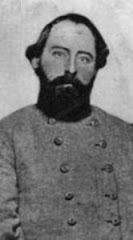
Gilbert Wright
Mary's brother, Gilbert Jefferson Wright, was among the first to volunteer for the Confederate Army, having previously fought in the Mexican War.  He helped to organize Cobb's Legion and served in all of the campaigns of the Army of Northern Virginia.  He eventually achieved the rank of General. 

Greenberry Gordon
Mary's husband, Dr. Gordon, was a delegate to Georgia's Secession Convention in 1861 (where he voted against secession) and raised a company of Confederate soldiers from the LaFayette area. He served as a surgeon in the Georgia 9th Infantry, resigning in 1862 after participating in both battles at Bull Run, among others. 


During the War, Mary was the proprietor of the Goree House Hotel, built in LaFayette about 1854.  

Goree House

Neither the Union nor the Confederacy had a formal military intelligence network during the Civil War. So both sides relied on spies to obtain crucial information.  The Confederacy set up a network in the Federal capital of Washington DC where there were many Southern sympathizers.  The Union Army relied on individual generals to take charge of intelligence gathering for their own operations, providing details of troop movements and strength.  Spying of course was not without risks.  Spies who were not in military uniform were hanged if caught. 


Now, given her Confederate roots, one would hardly suspect Mary Wright Gordon of being a spy for the Union Army, but perhaps that is what made her a good choice. As a hotel proprietress, Mary had reason to travel to Chattanooga and elsewhere to obtain supplies for her establishment and her travel gave her the opportunity to join the ranks of the Civil War's "petticoat spies. " She claimed to have crossed the Union lines into Chattanooga more than 50 times carrying information about Confederate movements. 

According to the records of the Southern Claims Commission, Mary claimed that not only had she been fiercely loyal to the Union, but an active Union spy whose safety and person were threatened by Rebel forces and her own neighbors on more than one occasion. In 1875, Mary made a claim for $2888 in damages to her property and was actually awarded $1233, a considerable sum to anyone living in the war-ravaged economy of Walker County during Reconstruction. 

The first major battle of Civil War to be fought in Georgia was Chickamauga, (September 1863) only a few miles from LaFayette.  The Chattooga Academy became the headquarters of Confederate General Braxton Bragg in 1863, and he supposedly planned the Battle of Chickamauga there, the most significant Union defeat in the Western Theater.  A stack of cannonballs in front of the school honors Bragg. 

The war came to LaFayette in June 1864 when Union forces of about 450 men occupied the town to "endeavor to rid the country of several guerilla bands." LaFayette had a particular strategic importance even though it was a fairly small town.  It was the largest settlement between the natural barrier of Lookout Mountain and the Western and Atlantic Railroad, a vital transportation and communications link between Atlanta and Chattanooga. Naturally the Union army wanted to discourage the presence of large Confederate forces in Walker County.  

On June 24, the Union forces were attacked by Gen. Gideon Pillow and his 1600 cavalry, but the next morning, Union reinforcements arrived and drove off the Confederate attackers, leaving a total of 219 casualties from the battle. The LaFayette Presbyterian Church was used as a field hospital by both armies. This escapade was considered such a debacle for the Confederates that General Pillow was taken out of the field and assigned to recruiting soldiers for the remainder of the war. 


Mary Gordon took several wounded Union men into her home and with her husband, Dr. Gordon, by this time a civilian, nursed them for months as well as contributing sheets, blankets, crockery and cutlery to the hospital. Several of the Union officers were staying at Mrs. Gordon's Goree House hotel and it was probably the location of the legendary all-night poker game that was interrupted by the news of the Confederate attack on LaFayette.

Mary indicated in a later account that she hid her four children in the fire place of the hotel and put mattresses over the windows to protect them during the fighting.  The wooden buildings on her farm property were torn down to construct Union fortifications (for which she later claimed compensation.)

Mary Gordon was sending information to the Union Army during the winter and spring preceding the Battle of LaFayette, and she is even mentioned in a dispatch to General Grant himself: "Mrs. Dr. Gordon informs me that she saw two cars of wounded going South." In April of 1864, the Confederate Army put out an order for her arrest and there is some speculation that Union troops were sent to LaFayette in order to protect Mary at a time when her activities were becoming notorious among the Confederate troops. Union records indicate that Confederate soldiers were told that the Union would burn down LaFayette if Mrs. Gordon were arrested.  (She never was, although there were apparently several orders given for her arrest.)  At one point, she was even moved to Chattanooga because of the threats made against her by "the disloyal people of the vicinity in which she resided." 

One Union officer described her as

a woman of strong and decided intellect and brave and determined, was better suited to the secret service in which she was said to be employed than any woman I know.  She was decidedly obnoxious to the prevailing sentiments of the country.  I have heard a great deal about her from both sides.  From the rebels she was a Tory spy and from the Union element I have heard she was true and loyal to the Union. 

Late in her life, Mary wrote an account for the Walker County Messenger that describes the Battle of LaFayette (but naturally makes no mention of her role as a spy). She tells about sewing uniforms for the men of her husband's company and visiting Dr. Gordon in Virginia after the battle of Manassas.  Since the war, she said, "people have lived in LaFayette in peace and harmony."

Dr. Greenberry Gordon died in LaFayette in January 1887 of pneumonia. 

Mary Wright Gordon lived to the age of 82, dying in 1913 at the home of her daughter Fannie in Chattanooga. 

Walker County Messenger February 21, 1913, page 1.

Mrs. Mary Gordon, Aged 82, Is Dead

End Came Friday Morning at Home of Daughter in Chattanooga--Interment at Old Home Saturday

Mrs. Mary Gordon, aged 82 years, widow of Dr. Gordon, one of the pioneer citizens of the county and herself a life-time resident of Walker, died last Friday morning at four o'clock at the home of her daughter, Mrs. M.(sic, should be N.) G. Keown, in Chattanooga.

Mrs. Gordon had been in declining health all the winter and about a month ago lay at the point of death for several days. Displaying wonderful vitality she recovered from this attack and some weeks ago was well enough to be removed to the home of her daughter in Chattanooga, where the end came.

Surviving her are two sons, both in the west, and three daughters.

The remains were brought to Lafayette Saturday morning and conveyed to the Gordon graveyard on the old Gordon farm two miles northwest of Lafayette, where the body was laid to rest beside that of her husband. Funeral services were conducted by Dr. Roberson, of Chattanooga.


Sadly, but perhaps fittingly for a spy, I have no picture of Mary Wright Gordon. 


However, I have come across a picture of her daughter, Stella.  So perhaps this gives a little glimpse of what Mary might have looked like.